
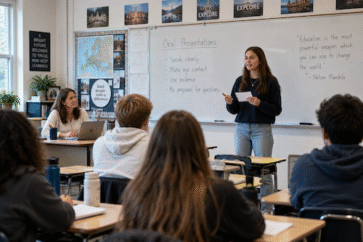
The oral exam is back, and AI may be the reason
AI hasn’t made assessment obsolete--instead, it is forcing educators to reconsider what actually counts as evidence that learning has taken place
In 2023, Catherine Hartmann, a professor at the University of Wyoming, gave students in a history of meditation course a deeply personal assignment: try a contemplative practice and write a reflective analysis on the experience.
Top Stories
Let’s work to keep our students while we still have them
According to research I recently saw , About 16% of young people ages 18 to 24 are not in employment, education, or training. Researchers call them NEETs, or disconnected youth. After 35 years in public education, I read the number a different way.
Quit saying “I’m not a math person”

It’s quite rare to hear someone say, “I can’t read” or “I’m illiterate so I don’t read.” On the other hand, lots of people claim that they’re “not a math person.” The phrase isn’t just “I don’t like math.”
5 questions to help every district leader make better decisions

As budgets remain tight and expectations for measurable student growth increase, every instructional decision carries greater weight. Choosing one initiative often means delaying another, making it even more important to separate promising ideas from approaches supported by stronger evidence.
Why K-12 cybersecurity education needs practice, not just awareness
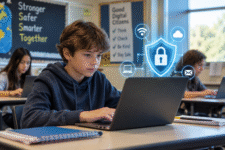
Students are already making cybersecurity decisions every day. Giving them a list of rules is not the same as teaching them how to recognize a threat.
The compliance trap waiting on the other side of Title II

Every few years, something shifts how schools think about accessibility. A law changes, a new technology arrives, or a group of advocates succeeds in bringing attention to the topic. Right now, it’s Title II of the Americans with Disabilities Act.
The everyday access control gaps schools overlook
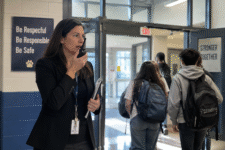
School leaders have invested heavily in campus security over the past decade. Cameras, visitor management systems, emergency communication platforms, and access control upgrades have become standard parts of many districts’ safety strategies.
AACTE releases national framework on AI in educator preparation
A new national framework from AACTE (American Association of Colleges for Teacher Education) aims to help educator preparation programs (EPPs) navigate the rapidly changing role of artificial intelligence in education.
When practice becomes data: Helping teachers respond to student misconceptions
A student can complete 20 questions and still leave a teacher with very little useful information. A score may show that something went wrong, but it does not always show which learning objective needs attention, whether the problem is a misunderstanding or a careless error, or what the student should practice next.
EDUCATION RESOURCE CENTERS
Evaluations That Elevate: Moving Your District From Compliance to Growth

What if evaluation felt less like paperwork and more like progress? Observation cycles, rubric scoring, summative ratings, SLOs, and growth plans shouldn’t live in disconnected systems. Explore how one platform helps HR directors, superintendents, and instructional leaders bring it all together — for every employee, every role, every district.
Sponsored Content
Why interactive solutions are a smarter investment for schools
School IT leaders face a constant balancing act to deploy technology that enhances learning while keeping systems secure, manageable, and cost-effective.
Advancing digital equity through teacher leadership

Meaningful opportunities for teachers to build expertise and leadership beyond their classroom add to a sense of professionalism and fulfillment. In an age when the role of technology in education is rapidly changing, why not allow teachers to lead the way?

Why interactive solutions are a smarter investment for schools

School IT leaders face a constant balancing act to deploy technology that enhances learning while keeping systems secure, manageable, and cost-effective.
Wearable tech helps students overcome central vision challenges

Central vision loss–a condition that impairs the ability to see objects directly in front of the eyes–can have profound academic and social impacts on K-12 students.
